How NYC is relearning reading education*
By Aashna Miharia, Deputy Managing Editor, Washington Square News
Over the last couple of years, New York City’s public school system has drawn national attention after drastically altering how elementary schools teach students to read. As city officials continue to roll out curriculum changes — part of the initiative “New York City Reads” — field experts warn that improving literacy rates will require more than just an overhaul of reading instruction, but an emphasis on the cogs of the education system that are often overlooked.
“If you don’t learn to read and write, there’s going to be a lot of challenges — there’s nothing more important,” Steinhardt professor Carolyn Strom told WSN. “For kids, the gaps that they had in kindergarten have now widened so much by fourth grade. It’s a constant daily challenge to be teaching reading in the city right now.”
New York City’s education department launched NYC Reads in 2023, after seeing a yearslong spell of plunging literacy rates. The program mandates that elementary schools adopt curricula rooted in what experts call the “science of reading” — which breaks reading down into pillars like decoding words and achieving fluency — as opposed to having students slowly sound out letters and use pictures as context clues until they piece words together. After over 700 elementary schools implemented NYC Reads, roughly 56% of third-to-eighth graders showed proficiency on state reading tests in August 2025, up from about 49% of students the year before.
The implementation of NYC Reads has garnered praise across the board. Politicians, educators and parents have commended New York’s public school network for adopting a system that reflects researchers’ longstanding conclusion: The best way for children to learn reading is by studying the foundations, rather than pushing through books and tripping over words until they finally catch on.
Steinhardt professor Susan Neuman, who teaches early literacy education and serves on the city’s Literacy Advisory Council, also applauded NYC Reads. She said that despite substantial changes to K-12 education policy, professors at NYU’s Steinhardt School of Culture, Education, and Human Development have not amended how they train students to become public school teachers.
“New York City is catching up to the kinds of teaching and development that we’ve already done,” Neuman said. “I don’t think NYU is doing anything different. I think New York City is doing something different, which is really moving toward the science of reading.”
Strom, who also teaches early childhood literacy, added that since NYC Reads launched, her students feel their experiences working in public schools finally align with their NYU education. The initiative, which makes schools choose one of three curricula, has faced criticism for being too rigid — including from Mayor Zohran Mamdani, who said that teachers should have more input in the material. However, Strom countered that teachers are still able to personalize their instruction while implementing methods rooted in research.
The education department brought NYC Reads to some public middle schools at the beginning of this academic year and announced plans to expand it to them all by fall 2027. City officials have also set a goal for all students to “become thriving readers and writers by 2035,” driven by NYC Reads. However, in interviews with WSN, aspiring middle-grade educators said they do not feel prepared to teach the foundations of literacy that many students still lack.
Both Neuman and Strom said that literacy education courses are required for all NYU students studying to become teachers, regardless of specialization, but Steinhardt seniors Kate Lan and Anderly Burgos — who both study English education for grades 7-12 — said they never learned how to instruct the science of reading. They said that when working as student teachers with middle-grade students reading at a kindergarten level, they do not feel qualified to help.
“We’ve never been taught how to teach reading or grammar in our program, and it’s something that we’ve complained about,” Burgos told WSN. “We have another friend who graduated last semester, and he’s telling us that in seventh grade, he has to teach students how to read. We’re never prepared for that — because they’re expecting for students to know how to read by then, but sadly not all of them do.”
Although Mamdani has supported NYC Reads since taking office, his most substantial education initiatives have centered around children younger than five. He aims to expand former mayor Bill de Blasio’s 3-K program, which provides free education for three-year-olds in New York City, and recently announced 2-Care — a program to provide free child care for two-year-olds, slated to launch this fall.
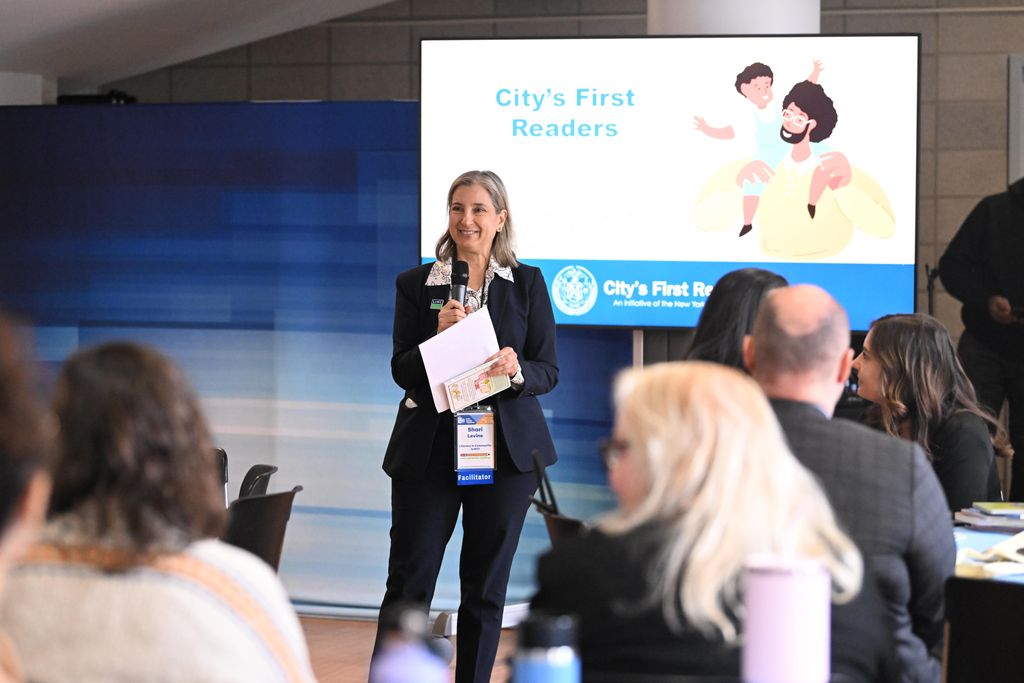
Some education advocates — including Shari Levine, executive director of the local nonprofit Literacy in Community — aim to start reading education even younger. In an interview with WSN, Levine emphasized that preparing children to read starts “at birth” and that solving the literacy crisis requires greater attention before children formally enter the school system. She criticized Mamdani’s sole focus on the affordability perks of 2-Care and 3-K, rather than also highlighting the programs’ potential to improve early childhood education.
“That is such an important building block for early literacy that we can’t think of it as a place to put your child so that the family can go back to work,” Levine said. “We have to look at it as a solution to the literacy crisis, so that as the child goes from 2-Care, 3-K, pre-K and kindergarten, they have all of the background foundation to be successful.”
Levine added that NYC Reads’ popularity is a hopeful sign that people are beginning to understand that the literacy crisis goes beyond what happens in K-12 classrooms — a sentiment Strom shared, noting that New York City’s success comes after decades of declining reading rates not just locally, but nationwide.
“This is the first time I feel like people are really looking into the science and truly trying to understand what’s going on in the brain,” Strom said. “There’s an emphasis now on understanding how people learn and how reading works. Hopefully, the science is here to stay.”
For media inquiries and more information about LINC’s work, contact communications@lincnyc.org.
_________________________
* This article is part of the latest edition of Under the Arch (Washington Square News’ magazine), called “The Literacy Issue.”